
If you've been told contact lenses aren't an option, there may be more choices than you realize. Specialty contact lenses can help many people with irregular corneas, keratoconus, and other complex vision needs achieve clear, comfortable vision.
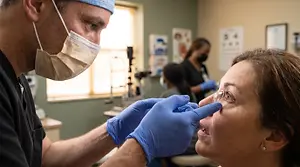
Specialty Contact Lenses in Littleton
When Standard Contact Lenses Do Not Work
Standard contact lenses may constantly move, feel uncomfortable, or never provide consistently clear vision when the shape of the eye is irregular. Conditions like keratoconus, corneal scarring, and post-surgical changes create a surface that soft lenses simply cannot conform to well. Specialty lenses are designed for exactly these situations.
Fellowship-Trained Specialty Lens Fitting
Small adjustments in specialty lens design can make the difference between all-day comfort and a lens that never feels right. Our fellowship training lets us make those precise adjustments for complex cases, because we understand how subtle changes in lens geometry affect both comfort and vision clarity.
When you come to us for specialty lenses, you are working with eye doctors who have dedicated extra years to this area of care. For patients who need a standard fitting before considering specialty options, a contact lens exam is the right starting point.

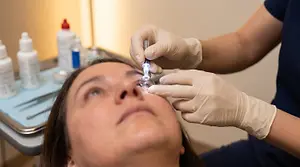
Scleral Contact Lenses
Scleral lenses create a smooth optical surface that often provides clearer, more comfortable vision for patients who haven't been successful with traditional contact lenses. They are large-diameter gas-permeable lenses that vault over the entire corneal surface and rest on the white of the eye (the sclera). The space beneath the lens is filled with preservative-free saline, which keeps the eye moist all day and protects irregular or sensitive corneas.
They are often the best option for people with keratoconus, severe dry eye, post-LASIK irregularities, and other complex conditions. Because the lens never touches the cornea, patients who have tried every other lens type often find lasting comfort with sclerals.
Eye Conditions We Fit Specialty Lenses For
- Keratoconus and corneal ectasia
- Post-LASIK or post-RK irregular astigmatism
- Corneal scarring
- Severe dry eye disease
- High prescriptions that standard soft lenses cannot correct accurately
- Failed soft lens wearers with comfort or clarity issues
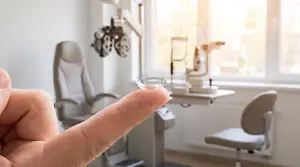
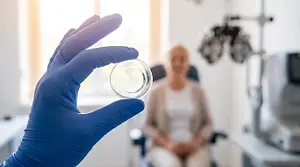
Keratoconus Management With Contact Lenses
Keratoconus often causes blurred, distorted vision that glasses and standard contact lenses can't fully correct. The underlying cause is a gradual thinning and outward bulging of the cornea, which creates an irregular surface that soft lenses cannot properly compensate for. Rigid and scleral lens designs vault over the distorted corneal surface and provide a smooth optical layer, often restoring sharpness that other methods cannot match.
Corneal changes are monitored over time and lens designs are adjusted as needed to keep your vision sharp and your eyes comfortable. When corneal crosslinking is performed, we co-manage your post-procedure lens care to ensure the fit stays current as your cornea stabilizes.
What a Specialty Lens Fitting Involves
- Full eye exam and updated prescription
- Corneal topography (detailed corneal surface mapping)
- Trial lens selection based on corneal shape and condition
- In-office assessment of lens fit and vision
- Insertion and removal training for larger lens designs
- Follow-up visits to refine the fit
- Ongoing care as your cornea changes over time
Frequently Asked Questions
Scleral lenses are much larger than standard lenses and vault over the cornea rather than resting on it. The fluid reservoir underneath keeps irregular or dry corneas comfortable and provides a smooth optical surface regardless of corneal shape.
Scleral lenses require a different insertion technique than standard lenses. Most patients get comfortable with it within one to two weeks of practice. We train you step by step at your fitting visit.
Yes. Patients with keratoconus, post-surgical corneas, or significant dry eye are often told standard lenses will not work, and that is often true. But specialty lens options may still provide clear and comfortable vision. A consultation is the way to find out.
Some medical insurance plans cover scleral lenses when they are prescribed for a diagnosed corneal condition such as keratoconus or post-surgical irregular astigmatism. We can help you check your benefits before your fitting.
Specialty lens fitting usually takes more than one visit. We select an initial trial lens, assess the fit, and order your custom lens based on those findings. Most patients have their final lenses within two to four weeks of the initial fitting.
Get a Specialty Lens Consultation in Littleton
At Active Eyes, your Littleton optometrist team offers fellowship-trained specialty lens fitting for keratoconus, scleral lenses, and other hard-to-fit cases. We serve patients in Littleton and the nearby foothill communities. Find our hours and location to plan your visit.